What Actually Happens When a Tech Services Your AC
A real maintenance visit is closer to a full physical for the system than a filter swap with an invoice attached.
August 27, 2026 · 4 min read
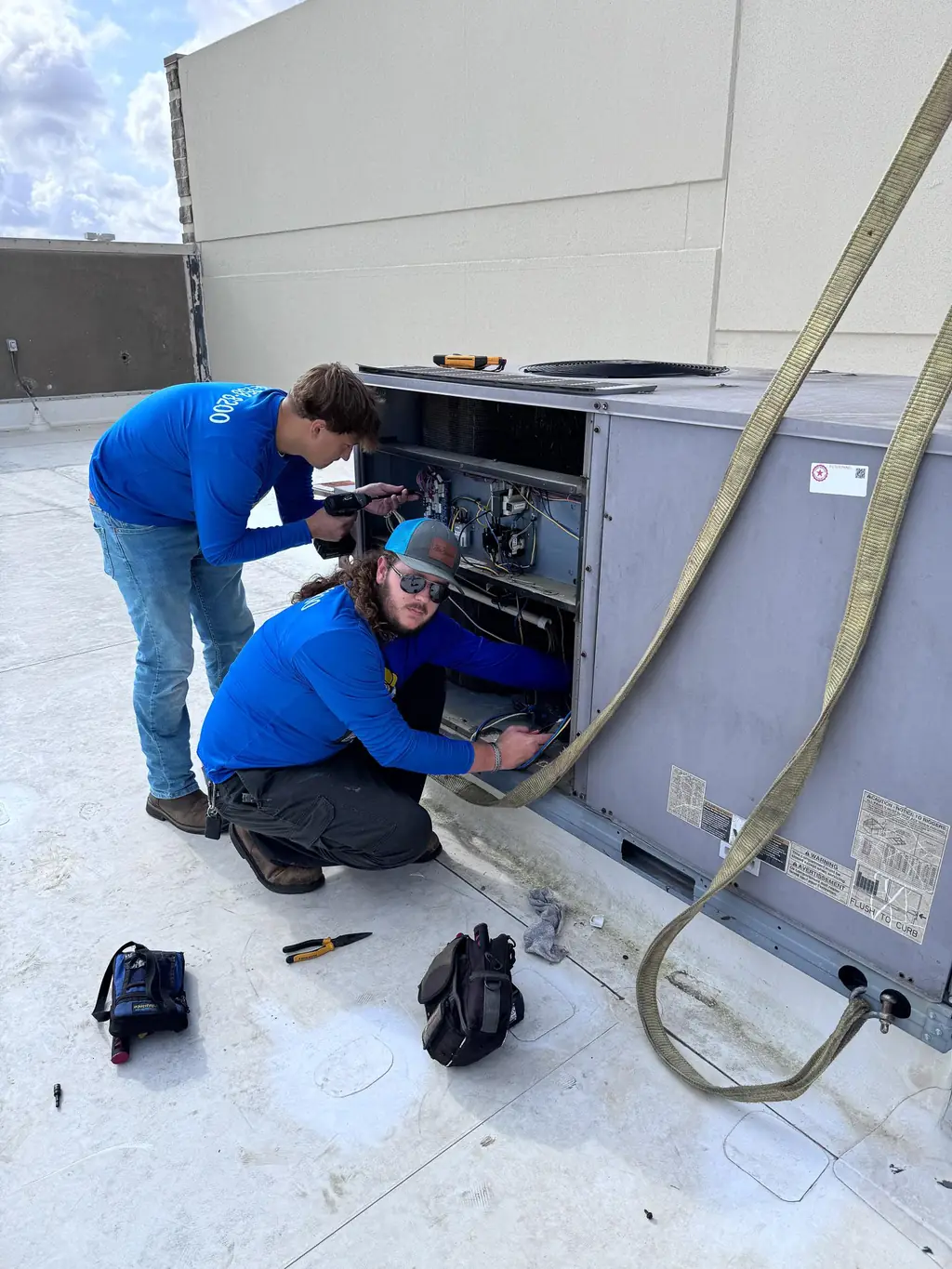
Why This Isn't Just a Filter Swap
A lot of homeowners picture a maintenance visit as someone swapping a filter and glancing at the thermostat before writing an invoice. A real visit is closer to a physical for the whole system, indoors and out, and it's built around catching the kind of wear that doesn't show up as a symptom yet. The parts that fail on the hottest day of the year rarely fail without warning. They just don't warn you loudly enough to notice on your own, which is exactly what a scheduled visit is designed to catch instead.
What a Real Visit Actually Covers
- A full inspection of both the indoor and outdoor units, not just the parts visible from the yard
- Airflow and thermostat calibration checks, since a miscalibrated thermostat can make a healthy system look like it's failing
- Cleaning of the condenser coil outside and the evaporator coil inside, both of which lose efficiency fast once coated in dust or debris
- A refrigerant level check paired with performance diagnostics, not just a quick gauge glance
- Electrical connection testing and tightening, since loose connections are a common cause of intermittent failures
- Drain line flushing, to head off the kind of clog that backs water up into a ceiling or closet
- Filter inspection and replacement if it's due
- Safety system testing and a full startup cycle, to confirm the system shuts down safely if something goes wrong
Why Manufacturers Tie Warranties to This
Most compressor and parts warranties on modern systems are conditional, not automatic. Manufacturers require documented annual maintenance because the failures they end up paying for are disproportionately caused by neglect: a coil that never got cleaned, a refrigerant leak that went unnoticed for two seasons, electrical connections that loosened and arced. A manufacturer has no way to know which failures were bad luck and which were preventable, so they shift that risk back onto the homeowner by requiring proof of upkeep. Skip the maintenance and a legitimate warranty claim can get denied on a technicality, which is a hard thing to find out about after a compressor has already failed.
Spring and Fall Aren't Interchangeable
Cooling and heating are different systems sharing space in the same cabinet, and each earns its own checkup at a different time of year. A spring visit catches the AC side before the long run of summer load starts. A fall visit does the same for the furnace side before the first cold snap. Checking both at once in whichever season someone happens to remember misses the point: you want the cooling side confirmed healthy right before you need it hardest, and the same for heating. A biannual plan built around that rhythm, spring for cooling and fall for heating, catches problems on a schedule instead of by accident. A named maintenance plan with guaranteed seasonal visits and priority scheduling for emergency calls exists for exactly this reason, so the schedule doesn't quietly slip a year.
What a Good Technician Checks That Isn't on Any List
The written checklist is the floor, not the ceiling. An experienced technician listens for a compressor that sounds slightly off before it throws a code, checks amp draw against the nameplate rating rather than just confirming the unit powers on, and looks at coil fins for the kind of bent or matted damage that chokes airflow without ever tripping an alarm. That judgment is the part that's hard to write into any checklist, and the reason two visits covering the same list on paper can turn up very different findings in practice.
What Skipping a Season Actually Costs
Skipping a single maintenance visit rarely causes an immediate failure, which is exactly what makes it easy to put off. The real cost shows up as compounding neglect: a coil that goes an extra year without cleaning loses more efficiency than a straight line would suggest, a refrigerant leak that goes undetected for an extra six months does more damage to a compressor that's now running low and hot, and a loose electrical connection that isn't caught early has more time to arc and degrade before anyone notices. None of these show up as a single dramatic bill. They show up later, as a repair that costs more and arrives sooner than it would have if a routine visit had caught the problem while it was still small.
The Point of Doing This on a Schedule
None of this requires a homeowner to know anything about refrigerant or amp draw. It requires showing up on a schedule instead of waiting for a no-cool call, and letting someone who does this daily catch what a checklist alone might miss.
Air Monkey Air Conditioning & Heating, 281-758-8200
Call 281-758-8200More articles
The Warning Signs Your AC Gives You Before It Quits
Most air conditioners don't die without warning, they just don't warn you loudly enough to notice on your own.
The Ductwork Problem Hiding in Your Attic
A system with a healthy compressor and bad ductwork can still leave rooms uneven and bills high, and the equipment gets blamed for it every time.